What is a human workplace?

Who this is for: people who lead organisations, work inside them or change them, and anyone who uses the word human about work and wants it to lead somewhere.
BLUF: The human-centric movement has grown in layers: how people are treated, how work is designed, how we use evidence about people, and how we value human judgement. The layer it has mostly not reached is the fabric, the trust, relationships and memory that organisations run on. The other layers depend on it, so it has to be designed with it in mind.
I recently saw a post that built on the growing conversation about more humanity in the workplace. It sparked a LinkedIn chat, which made me think about what we mean by a human workplace. And, as usual, thinking turned into writing.
How the idea has grown
Talk of human workplaces, human-centric leadership and human approaches to change has grown over the last few years, and it has grown in layers.
The first came out of the pandemic. Remote working made work conditions visible in a way they hadn't been before, and attention turned to experience, wellbeing, and the place itself. Simone Fenton-Jarvis's The Human-Centric Workplace, published in late 2021, belongs to this moment.
The second wave made the performance case. Gartner's 2022 research described human-centric work models, in which people are seen as people rather than resources, and linked them to higher performance and retention. Deloitte's 2024 human capital work talked about human sustainability: treating business results and human outcomes as reinforcing each other, rather than putting one ahead of the other.
The third wave is about AI. As machines take on more work, the question becomes what people bring that machines don't. Thinking Machines Lab describes its mission as building AI that extends human will and judgement.
Alongside all this, many leaders now describe themselves as human-centric, and change consultancies such as my good friends at ChangeMaker separate human change, how people come to support and adopt a change, from its structural delivery. It has become a movement; I count myself part of it with my work on human centric operating models, and to be blunt in the face of the slogan waving, dashboard and pipeline worshipping, self promoting, self interested, output oriented leaders..... it can't come soon enough.
Five layers of meaning
Each wave added a layer to what we mean by human. It helps to pull them apart, because they are different things and each one needs the others.
The first is how people are treated: as individuals with lives, limits and judgement, rather than as resources to be allocated. Most of us start here, and it matters.
The second is how work is designed: around how people work, with limited attention, a need for trust before candour, and a habit of adapting to the signals around them. The emphasis on flexibility, collaboration and autonomy sits here.
The third is that organisations run on human things. Trust, relationships, shared memory and judgement support the structure; they are not a courtesy added to it.
The fourth is acting on the evidence about people. A great deal is known about how people learn, cooperate and change, and a human organisation puts this knowledge to use rather than setting it aside until someone brings it in from outside.
The fifth is valuing the contributions the organisation depends on people for: judgement, care, sensemaking, and the trust that lets others act. The AI wave has brought this one to the front.
Having one of these layers doesn't mean you have the others. An organisation can be strong on the first layer and still have a design that wears people down, or invest in AI that removes the practice people need to keep their judgement sharp. So the useful question isn't whether an organisation is human, but which layers it has and which it is still missing.
The layer still to come
Of the five, the third gets the least attention, and I think it is the one the others depend on.
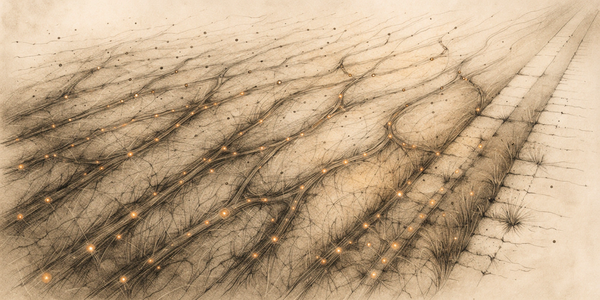
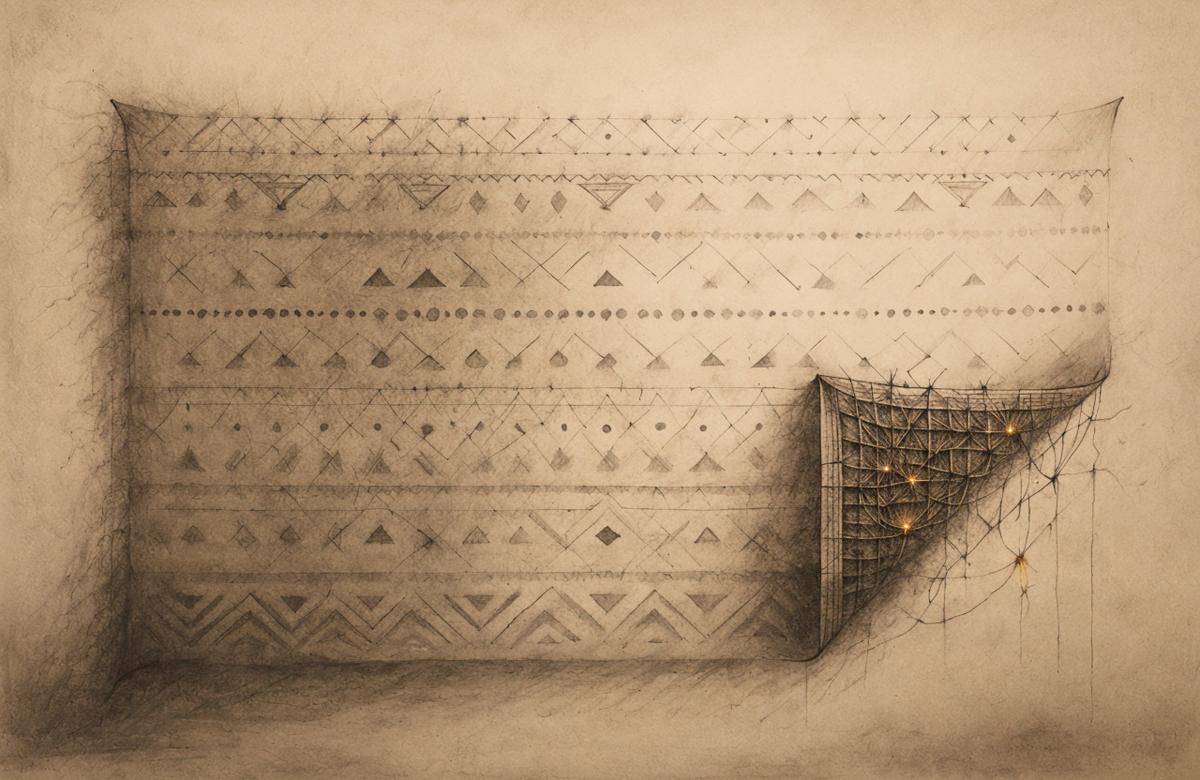
Most operating models are designed around capabilities and the outputs each one produces. Outcomes arise when capabilities work together across boundaries, and no single capability owns them. The gap is covered informally: by people who know whom to ring, who work around the process, and who keep teams in touch where the design left a gap. That informal layer is what I call fabric (you may be familiar with some of my writing on www.ariet.net).
This informal effort fills the gaps in the design, and nobody tracks how much the organisation relies on it. The measures stay green as it is used up, so the organisation can't see when it reaches the point of running out. Trust, goodwill, effort and shared memory are stocks (see systems thinking): they run down quietly while the output figures look fine. Failure then appears sudden, even though it has been building for some time.
The fabric also isn't automatically on the side of change. It adapts to the signals people actually read. A technology leader in local government put a sharp version of this to me recently: the informal organisation can become the way the old organisation reasserts itself, quietly dismantling the transformation that was just designed. I recognise what she describes, but I read it differently. When a redesign changes the structure but leaves incentives, decision habits and established networks in place, those are the signals that win, and the fabric follows them back towards the old model. It isn't working against the change; it is responding accurately to a change that only reached the formal layer. Trust and strong relationships can protect the old order as readily as they support the new one, so what matters is which connections last and what they carry.
This layer is less visible than the others because you can't buy or install it. It has to be designed for, through the conditions that allow the right connections to form and endure.
Why it matters for the rest
Without the third layer, the other four are fragile.
Flexible and hybrid work depends on trust and relationships that were often built in person; if they are neglected, they thin out over time. Empathetic leadership helps, but it can't make up for a design that rewards guarding the boundary. Knowing the evidence about people changes little if the conditions it describes remain the same.
AI is the clearest example. AI that extends judgement only works if people maintain the practice that builds judgement. Lisanne Bainbridge described the trap in the early 1980s as one of automation's ironies: the machine takes the routine cases, so people get less practice, yet they are still relied on for the hardest ones. Aviation addresses this by deliberately training for the hard cases; most organisations don't.
In each case, the visible layer works only as long as the fabric underneath it does.
A question to ask ourselves
One question can help all of us: if we truly meant to put people at the centre across all five layers, what would we stop doing?
The answers will differ between organisations. They might include fewer cascaded targets that pull teams back into their own boundaries, measures that show capability as well as output, protected time for the people who keep things joined up, avoiding turning judgement into an approval step, and using what is known about people as part of normal work.
Asked sincerely and answered honestly, the question turns a shared value into specific design decisions, which is the work the third layer needs.
What each of us can do
The question is a start, but turning it into change needs something from everyone involved.
If you lead an organisation, look at the signals you send, not just the values you state. People follow what is funded, measured and rewarded, so check that those align with what you say about people. Find out how the work really gets done, including the informal routes, before you change it; what you can't describe, you may take apart by accident. Protect the time and roles that keep people connected, even when they don't show up in the output figures.
If you work within the system, make the informal work visible. Say who you rely on, which workarounds keep things running, and which connections would break if a role or team disappeared. This is information the formal design doesn't have. Look after the relationships that make the work possible, and treat developing your own judgement as part of the job, not something a process or a tool can do for you.
If you are changing the system, as an architect, change lead or consultant, design for the fabric as well as the structure. Map the seams between teams and identify who actually covers them. Identify the workarounds that go-live will close before it does. Keep some recovery capacity out of the savings. And review capability six months on, not just outputs at go-live, because that is when you find out whether the change has taken root or the old organisation has quietly returned.
The conversation itself has changed in a helpful way. Earlier waves leaned on words like empowerment, which described something done to people. The current one starts from what people are like. It draws on what is known about how people think and feel: attention and fatigue, belonging, psychological safety, and how trust forms. Its leading voices bring that evidence with them: Amy Edmondson on psychological safety, Gary Hamel and Michele Zanini's case against bureaucracy in Humanocracy, and Adam Grant and Brené Brown on how people work, give and lead. It is also personal; people talk about it from their own working lives, with real conviction. That mix of evidence and conviction is what the design work needs, because it gives leaders and designers reasons to act on, not only values to agree with.
A note on how I write. The observations, questions and arguments are mine; so is the experience behind them. I work with Claude, an AI assistant, on research and drafting, and I edit and check until I can stand behind each statement. Any errors are mine too.