Memory as capability, not identity: the hidden lever of organisational viability
If you are seeing a new leadership team undo the last one's work, or bring back something you got rid of five years ago, this article may be for you.


Reproduced from a LinkedIn article from February 2026
Who this is for: If you are seeing a new leadership team undo the last one's work, or bring back something you got rid of five years ago, this article may be for you.
BLUF: Organisational memory matters as capability, not as identity. The discipline is to carry forward the capabilities that reduce friction and risk and let go of inherited structures that have drifted into habit, asking of each part whether it preserves capability or only comfort.
Context
I am reading a study on the rise of cynicism in British society since the end of WW2 and stumbled across the Boulez quote below.
I love this type of learning: you experience something that prompts an unexpected thought, and you dive deeper. These journeys also reflect that the human world is far more complex than we can ever comprehend, and to try to distil that into a few bullet points for executives is wrong, but that’s the subject of a future paper.
So, what happened afterwards is that I had a startling chat with CoPilot. Before you judge:
- Some may say, “Why couldn’t you have done that with a human?” Well, I cannot think of a human that I could have done this with (although I can imagine a community and would welcome that).
- Some may say I am relying too much on the machine's intelligence. Maybe, but again, the chat has sparked ideas that wouldn’t have occurred to me.
- Some may say I have relinquished intellectual control. I don’t think so, not yet anyway. While it continues to stimulate discussion, raise questions, and rigorously challenge answers, it serves a purpose.
- Some may say this is not my work. I will respond that I saw the opportunity for a question, created and curated this exploration and learned something on that journey.
I asked it….
Do you remember the Paul Durish quote about neglecting what has been built and focusing on what’s next?
Here’s one from Pierre Boulez that contradicts it.
“I believe that a civilisation which tends towards conservatism is a declining civilisation because it is afraid to go forward and ascribes more importance to its memories than to its future ... From this viewpoint, our musical civilisation shows very distinct signs of decay since at all levels its emphasis on reclamation, even when wrapped in very general and broad considerations, shows that it has too many memories”.
Note the bit on the importance of memories. This resonates. As a species, we are obsessed with nostalgia. Can we reconcile these views?
The Durish quote seems to be particularly pertinent to business and society, whereas the Boulez quote is about us as humans.
Why are there two different ways of thinking? Why can’t I value and protect the past in business and society while also focusing on the future?
Introduction
We often talk about operating models as if they were technical artefacts: boxes, arrows, governance, standards, spans and layers. But behind every operating model sits something far more human: the way an organisation chooses to remember. Not the nostalgic, heritage-soaked memory Pierre Boulez criticised for clinging to its own past, nor the reckless amnesia Paul Durish warned against when organisations chase novelty at the expense of what already works.
The real question is what kind of memory an organisation carries into its future, and whether that memory enables or constrains its ability to change.
Most organisations don’t fail because they lack ideas or ambition. They fail because their operating models are saturated with the wrong kind of memory.
- The kind that protects identity rather than capability.
- The kind that freezes structures instead of evolving them.
- The kind that mistakes symbols for systems.
If operating model viability is the ability to change without breaking, then understanding the difference between memory-as-capability and memory-as-identity becomes a practical leadership skill rather than a philosophical indulgence.
The inspection of this interesting conundrum started as a philosophical indulgence, a simple question of “how can this be”, but I hope to show it has practical merit.
This paper explores that distinction, why it matters for viability, and how reframing memory.
The discussion with CoPilot was remarkable and it would have been tempting to include but to ensure I can add my own commentary and insight I have spliced together its content and mine.
Reconciling these apparent conflicts
These two quotes are talking past each other rather than truly contradicting.
We can reconcile them by separating what is being protected, why, and at what level.
The apparent contradiction is at a high level:
- Durish warns against neglecting what has already been built in the rush to chase what’s next. On the surface, he is saying, “don’t abandon the past”.
- Boulez warns that a civilisation overly focused on reclamation, memory and conservation signals a fear of the future and, therefore, decay. On the surface, he is saying, “don’t cling to the past”.
But the tension dissolves once we ask: what kind of past, and to what end?
Memory vs capability (this is the key distinction)
The most useful reconciliation is this. Durish is talking about capability. Boulez is talking about identity.
Durish: We must protect accumulated capability. In business and society, ‘what has been built’ usually means:
- Skills
- Institutions
- Systems
- Trust
- Infrastructure
- Social capital
- Hard-won organisational learning.
Neglecting these in favour of novelty is destructive because:
- Capability compounds slowly
- It is fragile
- Once lost, it is expensive or impossible to recreate.
Durish is not arguing for nostalgia. He’s arguing against amnesia. If you forget what works, you don’t become innovative; you become incompetent.
Boulez: We must beware identity anchored in memory. Boulez’s target is very different. He is critiquing a civilisation that:
- Defines itself primarily by what it has been
- Treats preservation as a virtue in itself
- Uses memory as a substitute for imagination
- Mistakes reverence for relevance.
His warning concerns memory as identity, not as a resource. When the past becomes the main justification for the present, the future has already been surrendered.
This is why he uses words like conservatism, reclamation, and decay. He’s describing a culture that is afraid to risk becoming something else.
Why humans drift towards nostalgia
Nostalgia is a species-level behaviour, and here are a few reasons it’s so powerful:
- Cognitive comfort. The past is known; the future is uncertain
- Survivorship bias. We remember what endured, not what failed
- Identity stability. Memory anchors who we think we are
- Loss aversion. We fear losing what we recognise more than missing what we don’t yet have.
This creates a dangerous pattern:
- We curate memory
- Then defend it
- Then institutionalise it
- Then confuse that institution with civilisation itself.
Boulez is railing against that dynamic.
Why business and society need a different balance
Here’s the crucial point. Societies and organisations collapse faster from forgetting how they work than from remembering who they were.
In business, especially:
- You must preserve operational memory
- You must protect enabling structures
- You must maintain the boring but vital systems that innovation depends on.
But this is where Boulez re-enters: the purpose of preservation matters.
- Healthy preservation says: “We protect this so we can do something new.”
- Unhealthy preservation says: “We protect this because it is who we are.”
Durish is advocating the first. Boulez is condemning the second.
The false binary: past or future
The real question is this: Why can’t I value and protect the past in business and society, while also focusing on the future? I can, but only if I reject the false binary between:
- Conservation vs progress
- Stability vs change
- Memory vs imagination.
A more accurate framing is:
[Image from the LinkedIn version goes here; not found in the download]
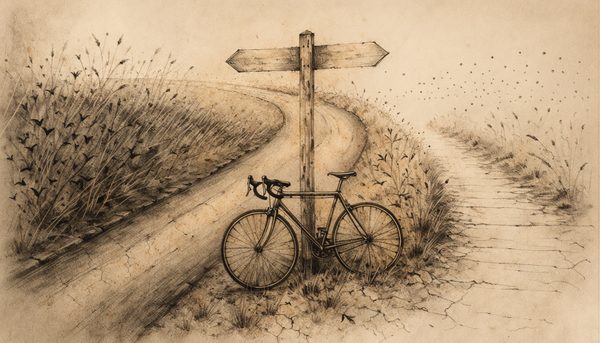
The past should be scaffolding, not architecture.
A synthesis that holds both truths
Here’s a reconciled position that honours both thinkers:
A civilisation (or organisation) declines when it remembers to avoid change, and collapses when it forgets to pursue it.
Or, more bluntly:
- Durish warns against innovation without memory.
- Boulez warns against memory without innovation.
The danger is not valuing the past. The danger is using the past as an excuse:
- To stop adapting
- To stop risking
- To stop imagining.
Why this resonates
I have a long-running concern with:
- Capability-based planning
- Organisational memory
- Knowledge in the community
- Agency over output.
…it makes perfect sense that this tension bothers me.
I am wary of waste; waste of effort, trust, learning, and human energy. At the same time, allergic to:
- Heritage theatre
- Legacy-as-identity
- Progress is framed as a betrayal of the past.
That’s not a contradiction.
The link to operating model viability
I am writing a paper on some missing elements of operating model design that focus on viability and not pure capability. This discussion links to it, but the full paper will be released soon.
Memory, operating models, and viability
Once you start thinking of memory as a capability rather than an identity, operating models stop being neutral diagrams and start revealing what an organisation is really trying to preserve.
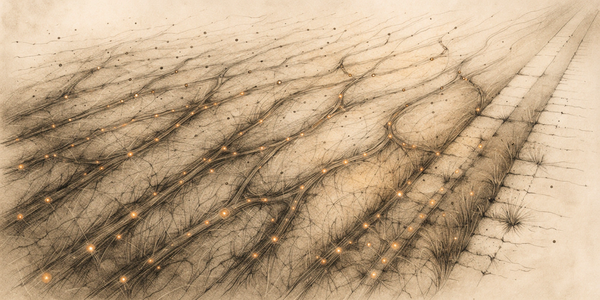
An operating model is, at heart, memory encoded into structure. It is how an organisation remembers how to get work done: where decisions sit, how information flows, what is standardised, what is local, what is automated, what is relational. It is accumulated experience turned into repeatability.
This is why operating models are so emotionally charged. They are not just designs for coordination; they are repositories of past learning, past compromise, past power, and past success.
When people defend operating models, they are not only defending ways of working; they are defending memory. But this defence can take two very different forms:
Defending the operating model to preserve identity. This is the familiar one. The past becomes sacred. Structures and roles persist not because they enable effectiveness, but because they symbolise “how we’ve always done things”. Change becomes existential rather than developmental. Here, memory is a constraint.
Abandoning the operating model to reject identity. This is the mirror image, and just as harmful. When a new leader arrives, or when strategy shifts, organisations often experience a kind of institutional amnesia. The narrative becomes one of rupture: a fresh start, a bold new direction, a reinvention. In the rush to signal change, parts of the operating model that hold vital capability memory get bulldozed.
And here’s the irony: the “new” ideas introduced in these moments are rarely new. They’re recycled versions of previous cycles: centralisation, decentralisation, productisation, and platformisation, for example. All these the organisation has usually tried before. But because institutional memory has been overwritten in favour of novelty, the organisation must re-pay the cost of learning.
In other words, abandoning an operating model too aggressively is another form of identity-driven behaviour. It’s a rejection of what the organisation was, rather than a careful evaluation of what the organisation knows.
Both behaviours, uncritical defence and uncritical abandonment, are symptoms of the same problem: confusing memory-as-identity with memory-as-capability.
There is an important side note here when considering “a careful evaluation of what the organisation knows”. It is a quieter but deeply relevant point about organisational knowledge. What an organisation “knows” is not held in documents, systems, or process maps, it lives in the collective competence of its people, in the relationships between them, and in the communities through which knowledge flows. Yet organisations rarely invest in this capability.
They demand that people ‘share knowledge’ while doing almost nothing to cultivate the conditions of trust, time, community, and continuity, that make sharing possible. A careful evaluation of what the organisation knows is therefore not an audit exercise, but a community one. Viability depends not only on designing operating models, but on nurturing the human networks that carry the memory those models rely on.
Viability as the discipline of remembering correctly
A viable organisation is not the one that preserves the most memory, nor the one that sheds it most aggressively. It is the one that is precise about it.
To be viable, an operating model must allow the organisation to:
- Retain the capabilities that reduce friction, prevent failure, and enable adaptation
- Shed the identities that no longer fit the reality of work or the demands of the environment.
When organisations cling to identity-memory, they become rigid. When they erase capability-memory, they become fragile. Viability demands avoiding both traps.
This is why operating model redesign is so difficult: it must be an act of selective remembering. Not nostalgia. Not rupture. Something more thoughtful; carrying forward only the parts of the past that enable the future and letting go only of the parts that constrain it.
The challenge is not protecting or rejecting the past, it’s knowing the difference.
A simple test for leaders
Whenever you’re changing an operating model, ask:
Are we preserving this because it’s who we are, or because it’s what we know how to do?
If the answer is “who we are”, you are preserving identity. If the answer is “what we know how to do”, you are preserving capability.
The former often blocks change. The latter makes change safer and faster. This distinction is the heart of viability.
Why this matters to the larger argument
Integrating this perspective strengthens the whole narrative by showing that viability is not just a structural challenge but a memory challenge.
- Durish warns against forgetting: innovation without memory leads to incompetence.
- Boulez warns against clinging: memory without innovation leads to decay.
- Viability sits precisely in the space between the two.
Operating models are the place where this balance becomes real, where remembering and forgetting are not abstractions but design choices. Organisations don’t decline because they remember too much or too little; they decline because they remember the wrong things.
A few words on identity
The discussion appears to dismiss identity as not important. Identity is important, profoundly so. The point isn’t to dismiss identity, but to understand when identity supports viability and when it silently undermines it.
Identity isn’t the problem; identity, confused with method, is. Identity matters because it gives an organisation:
- Coherence
- Meaning
- Purpose
- Belonging
- Legitimacy
- Narrative continuity.
Those things are not optional. They’re the emotional and cultural infrastructure that make capability possible. The danger isn’t identity. It’s when identity becomes overly attached to a particular structure, process, or way of working.
Identity should be about:
- Why we exist
- What we value
- How we show up in service of a mission.
Identity should not be anchored to:
- This hierarchy
- That specific committee
- That old process
- Those inherited rituals
- The last operating model we drew.
When identity fuses with operating practice, it becomes brittle. When identity stays at the level of purpose, values, and contribution, it becomes enabling.
When identity is healthy (and necessary)
Identity is important, even vital, when it does these things:
Anchoring purpose during change. Identity helps people understand the why behind adaptation. It says: We aren’t changing who we are. We’re changing how we deliver who we are.
Providing moral and cultural coherence. Identity holds the principles that guide decisions:
- Fairness
- Openness
- Service
- Professionalism
- Care.
These should endure even when everything else changes.
Sustaining trust and legitimacy. Stakeholders expect continuity of intent, even when form shifts. Identity protects that legitimacy.
Enabling agency and belonging. People need to feel part of something bigger than themselves. Identity provides the ‘bigger than’ part.
Serving as a north star for capability investment. Identity says: because of who we are, these are the capabilities we must continue to build.
In all these cases, identity enables capability rather than competing with it.
When identity becomes dangerous
Identity becomes a liability when it slips from purpose and values into method and structure. This happens when people say things like:
- “This is how we’ve always done it.”
- “This team has always held that decision.”
- “We can’t change that; it’s part of our DNA.”
- “This structure is who we are.”
- “If we stop doing it this way, we stop being us.”
These are identity claims masquerading as capability constraints. The danger emerges when:
- Structures become symbols
- Processes become heritage
- Roles become identity anchors
- Ways of working become moralised
- Operating models become cultural artefacts.
In that mode:
- Change feels like betrayal
- Capability is lost
- Viability erodes quietly.
This is what I am warning about.
How to value identity in the right situations
A simple rule:
Identity should guide why, and what, and capability should guide how. Here are three practical questions leaders can use:
Is this an identity question or an operating question? If the debate is about purpose, values, or service ethos, it’s an identity question. If the debate is about workflow, standards, roles, or structure, it’s an operating question.
Does this element express who we are or how we currently work? If it expresses “who we are”, protect it. If it expresses “how we work”, test it.
Would removing this undermine trust or only familiarity? If removing it breaks trust, it’s identity. If removing it only feels unfamiliar, it’s not identity; it’s a habit.
This keeps identity in its rightful place: as an anchor, not an anchor chain.
Identity is essential, but only when it describes purpose, not process; values, not workflows; the reason we exist, not the structures we currently use. When identity is kept at the level of meaning, it strengthens viability. When it attaches to method, it starts to erode it.
What can we do
1. Protect what the organisation knows, not what it was
- Stop preserving old structures just because they feel familiar.
- Preserve the skills, systems, relationships, and practices that actually help the organisation function well.
2. Don’t confuse identity with process
- Identity = purpose, values, service intent.
- Process = how you currently work.
- Don’t lock identity into old methods.
3. Treat memory as a living capability, not a museum
- The past should support new ideas, not block them.
- Keep learning alive; don’t fossilise it.
4. Challenge nostalgia and challenge amnesia
- Don’t cling to old ways just because they’re comfortable.
- Don’t throw away useful knowledge in the rush to look new.
5. When leaders arrive, avoid the ‘fresh start myth’
- Big new ideas are often old ideas recycled.
- Before changing anything, understand what the organisation already knows.
6. Build operating models that remember the right things
- They should encode capability, not identity or habit.
- They should allow change without losing competence.
7. Make knowledge flow a priority
- Knowledge lives in people and relationships, not documents.
- Communities, trust, and time to think are part of your operating model.
8. Ask better questions when changing things
- Does this decision preserve something essential, or something familiar?
- Are we keeping this because it works, or because it’s part of our story?
9. Treat identity as an anchor, not an anchor chain
- Identity should guide why you act, not how.
- Don’t let rituals or roles pretend to be principles.
10. Become precise about what to keep and what to let go
- Keep capabilities that reduce risk and help you adapt.
- Let go of identity‑laden structures that slow you down.
11. See viability as a memory challenge
- Organisations fail when they remember the wrong things.
- Or when they forget the right things.
12. Strengthen the human networks that carry knowledge
- Real knowledge transfer happens through community, not instruction.
- Invest in connection, not just content.
If you are not privileged enough to be in leadership, what is the one thing you can ask of your leaders?
“Please tell us what must endure, and what can change and why.”
That one question does three powerful things:
- It forces leaders to distinguish identity (what must endure) from method (what can change).
- It stops the usual confusion between purpose and process.
- It invites honesty about the organisation’s actual constraints and actual freedoms.
- It opens a door to agency, because once people know what’s fixed and what’s flexible, they can act with confidence.
This is the simplest, most disarming way to get leaders to reveal the real story of the operating model, what they’re unintentionally protecting, what they’re unconsciously clinging to, and where adaptation is genuinely possible.
If you are a leader and fancy being bold, what is the one thing you can do?
Publicly name what we will keep, and why, and publicly retire what no longer earns its keep.
This is bold because it requires:
- Admitting that some of the structure persists for identity reasons, not capability ones
- Letting go of familiar practices and rituals
- Explicitly protecting the capabilities that actually matter
- Being transparent about the criteria for deciding between the two
- Demonstrating that change is not betrayal, but stewardship.
Leaders rarely do this because it exposes their choices and creates vulnerability, and not all leaders have a White House spokesperson to aggressively defend them and want to avoid difficult questions! But when they do, everything becomes clearer and more honest:
- People stop guessing.
- Middle managers stop buffering contradictions.
- Teams stop treating every change as a threat.
- Capability preservation and capability building finally become intentional.
It is the single most powerful intervention a leader can make — and the most visible signal that viability matters.
Memory as capability: summary
Organisations depend on memory, but not all memory serves them equally.
The distinction is between memory as capability and memory as identity, and understanding the difference determines whether an organisation becomes more viable or more brittle over time.
Capability memory preserves the systems, skills, standards, and learning that make adaptation safer and faster.
Identity memory, when expressed as purpose, values, and ethos, provides continuity and meaning. It is the stable anchor that helps people navigate change. But identity becomes a constraint when it attaches to structures, processes, and ways of working, turning familiar methods into untouchable symbols and making change feel like a threat rather than a continuation of learning.
In operating models, this distinction shapes whether the past becomes a platform for growth or a prison.
Organisations may become rigid by clinging to identity-infused structures, or fragile by discarding capability-rich memory in pursuit of novelty, especially during leadership transitions. Uncritical preservation and uncritical abandonment are opposite forms of the same mistake: confusing what the organisation was with what it knows.
A viable organisation protects the past only when it enables the future. It carries forward the capabilities that reduce friction and risk, while letting go of inherited identities that have drifted into method rather than meaning.
This creates stable operating models without being rigid, and adaptive without being fragile. The practical discipline is asking, relentlessly and honestly, whether each part of the organisation reflects enduring identity or simply familiar structure, and whether it preserves capability or merely preserves comfort. The answer to that question is almost always the difference between resilience and decline.
Teaser….
A fuller exploration of these ideas, particularly the role of leadership in shaping viable operating models, and how capability-centred memory can be stewarded across cycles of change, will be set out in my next paper on the Leadership Operating Model and Viable TOMs.
That piece steps back from the day-to-day noise of restructuring and looks instead at the deeper organisational dynamics that determine whether operating models endure, adapt, or quietly erode.
It doesn’t offer templates or recipes; instead, it makes the case for a different kind of leadership attention, one that understands memory, coherence, constraint, and adaptability as interdependent conditions of viability.
If this blog has opened the question, the upcoming paper aims to illuminate the landscape around it.
A note on how I write. The observations, questions and arguments are mine; so is the experience behind them. I work with Claude, an AI assistant, on research and drafting, and I edit and check until I can stand behind each statement. Any errors are mine too.