Human centric target operating models
If you are seeing a new operating model that looks right on paper and people working the way they always did, only more tired, this article may be for you.


Reproduced from a LinkedIn article from March 2026
Who this is for: If you are seeing a new operating model that looks right on paper and people working the way they always did, only more tired, this article may be for you.
BLUF: Organisations are not 747s; the real operating model is shaped every day by what people pay attention to, what they believe and whether they can make sense of it. TOM work should move from blueprinting an ideal end state to guiding leaders to the simplest set of routines, capabilities and behaviours that works, with orientation designed in, and that cannot be done at pace.
For years, enterprise architecture and, for similar reasons, operating model thinking borrowed from engineering mindsets. As the Zachman thought went: “If you want to change a 747, get out the blueprints.” That works for machines because machines behave exactly as their design dictates (well, until “move fast and break things” messed with that!).
But human organisations are not 747s. You can redraw every process and restructure every box, yet people will still act based on what they understand, what they believe, what they prioritise, and what their leaders signal. Culture, clarity, overload, trust, and coherence shape performance far more than diagrams do.
Modern TOM work cannot rely on engineering logic or blueprint precision. It must start with how people orient, decide, coordinate, and make sense of their work every day.
My time at HSBC made me think a lot about human systems, and my time unemployed has given me more time to consider it.
Traditional operating model work often treats organisations like engineered systems: draw the right boxes and lines, map the processes, and the organisation will behave as the blueprint predicts. But real organisations don’t work like machines as they involve people, culture and leaders (which are like people occasionally!)
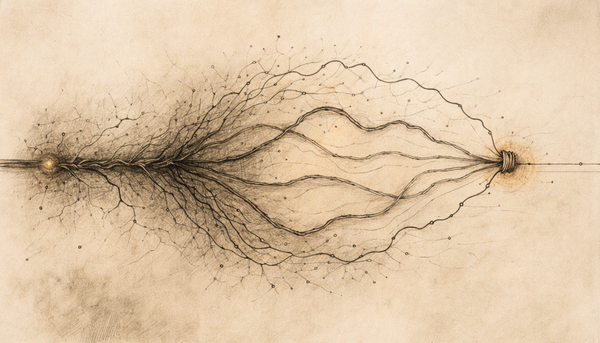
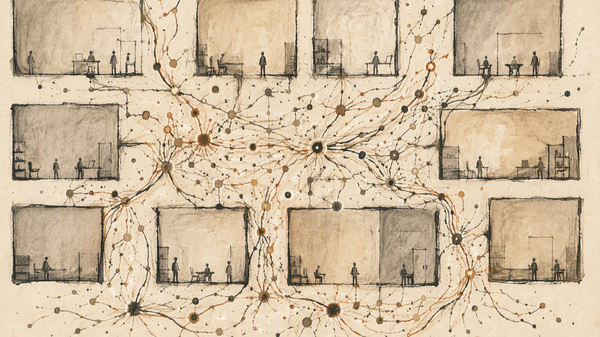
The real operating model is shaped every day by what people pay attention to, what they believe matters, how decisions get made, how teams coordinate, and how much clarity or confusion they experience. Diagrams don’t change that. Daily reality does.
This is why the classic ‘line of sight from strategy to capability to service to value stream’ is useful but incomplete. And before you respond, yes, I have done plenty of those assignments in my time.
It captures the visible design, but not the hidden capabilities that make an organisation viable. These are the stabilisers, the rhythms, the glue roles, and the ability for people at every level to orient: to understand what matters now, why it matters, and what the next move is. Without orientation, even the best-designed operating model breaks; people become overwhelmed, priorities drift, and change becomes harder rather than easier.
Modern TOM work must therefore start from a different premise: the aim is not to engineer the operating model, but to help the organisation configure the operating model that fits its strategy, maturity, appetite and constraints, and crucially, one that makes it easy for people to orient and act confidently. That begins by working with leaders to understand:
- What the organisation must do to deliver the outcomes that matter most.
- What it can do now, given its current capability and capacity.
- What it could do next, if it chooses to invest.
- What strengths already exist that can be amplified because capability grows fastest from assets, not gaps.
The reality is that there are almost infinite combinations of capabilities, routines and behaviours that could form a functioning operating model. The work isn’t to select the ‘perfect’ design; it’s to guide leaders toward the simplest combination of routines, capabilities and behaviours that reliably deliver the outcomes that matter without building anything unnecessary.
Central to that configuration is ensuring that orientation is designed in: clear priorities, visible decision‑making, predictable rhythms, early truth, manageable load, and leadership signals that reinforce coherence rather than fragmentation.
That is the shift:
- from blueprinting to guided configuration
- from gap‑finding to strength‑building
- from designing an ideal end‑state to building an adaptive system for today
- from assuming structure drives behaviour to recognising that clarity, culture and leadership create the real operating model
- and from overwhelming people to enabling them to orient and act with confidence.
The result is an operating model that is practical, lived and change ready. This is not because the diagram is perfect, but because the system makes sense to the people working inside it every day.
The issue here is that it is nuanced, it requires thought, options, discussion and generally cannot be done at pace. The reality, however, is that safe and sustainable change that doesn't overwhelm the system cannot be done at pace, even for a 747.
A note on how I write. The observations, questions and arguments are mine; so is the experience behind them. I work with Claude, an AI assistant, on research and drafting, and I edit and check until I can stand behind each statement. Any errors are mine too.