Finding impact when the line of sight is foggy
If you are seeing your teams flat out and nothing but go-lives to show the board, this article may be for you.


Reproduced from a LinkedIn article from March 2026
Who this is for: If you are seeing your teams flat out and nothing but go-lives to show the board, this article may be for you.
BLUF: When impact is distant, purpose withers and busyness fills the gap. Focus on the proximate effect on the next ring of people who rely on the work, make it visible in everyday routines and reporting, and design roles so that effect shows without anyone having to go looking for it.
Introduction
Over the weekend, I was chatting with someone who was describing some work she was considering getting involved in. She said it was attractive as it had "direct line of sight to the impact" (it is working for a hospital).
I love that phrase, but it occurs to me that we cannot always choose work where the impact is close. But how can we think differently when the impact is often difficult to see? And can we design work so the impact is evident and we don’t have to seek fulfilment, because it is already there by design? Can we give a much more meaningful view of purpose in an organisation that just does 'busy'?
Summary
Some roles have a direct line of sight to impact. Others operate at a distance, where effects are mediated by hand-offs, processes and time. In those environments, 'customer centricity' can become a comfort blanket: service is polite and responsive, but the change that has occurred is unclear.
A practical alternative is to focus on proximate, evidence-based impact; the tangible difference made to the next ring of people who rely on the work. Then make that visible in everyday routines and in leadership reporting. This is the same spirit as valuing contribution: noticing the thousands of small, enabling acts that line things up, reduce friction and move decisions forward, rather than celebrating only the final milestone.
I recently read a book about the role of a diplomat. The author described the architect's role and the microscopic advantages that lead to long-term success. In the book, he quotes Lord Salisbury from 1862, who said (and I have modernised the language a bit).
“There is nothing dramatic in the success of a diplomat. His victories are made up of a series of microscopic advantages: of a well-judged suggestion here, of an opportune courtesy there, of wise concession at one point and far-sighted persistence at another, of tact, calmness, and patience that no provocation or mistake can shake".
If we strip away the technology, this is what we are doing. We need to notice and value these impacts and design work to create them.
The core idea
Impact is more than satisfaction. It is a verifiable change: someone can do something sooner, more safely, with fewer errors, or with less effort because of a specific action. When the end beneficiary is distant, proximate impact (on colleagues, adjacent teams, and delivery partners) provides a clear sense of purpose and energy.
A minimal way to write it: Because I [did X], [this person/role] could [do Y] [sooner/safer/with fewer errors]. Evidence: [tiny proof].
Types of proximate impact to make visible
- Flow and friction; removing toil, reducing hand‑backs, shortening queues, improving throughput between teams.
- Decision quality and timeliness; reframing options, surfacing risks early, enabling smaller decisions to be taken sooner.
- Risk reduction; identifying failure modes before they spread; improving resilience, safety and reliability.
- Clarity and shared context; explaining, codifying and making information discoverable so others need fewer clarifications.
- Capability shaping; aligning patterns, standards and enabling platforms so delivery moves faster with fewer defects over time.
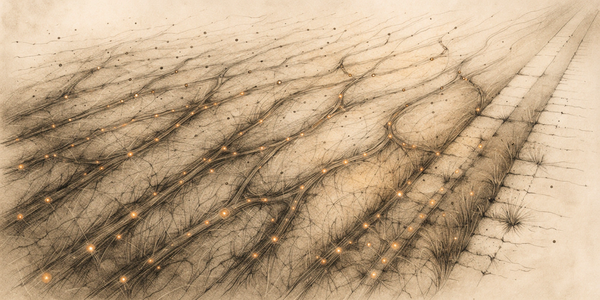
- Social fabric and community: convening the right people, building trust and cohesion, and strengthening cross-team collaboration (the often‑invisible work senior IT leaders do to keep the system healthy).
These are legitimate outcomes in their own right; they do not require forced claims about end-customer value that are many steps away.
Rewiring reporting so small, real impacts are valued
‘Big success reporting’ (presentation packs that privilege only flagship milestones) causes predictable behaviour: small moves are ignored, even though they compound into those milestones. A light recalibration helps:
- Create an impact change log. One page of single-line entries: Date, who was better off, what changed, tiny proof. This sits alongside major achievements.
- Ask one proximate question in governance. Who, specifically, is better off because of this work, and what is the evidence?
- Recognise the social fabric. Call out contributions that improved cohesion, trust and decision velocity, not just feature counts or go-lives.
- Balance lagging and leading signals. Keep milestones but add leading indicators of health: queue‑time trends, decision latency, rework avoided, and knowledge artefacts adopted.
The aim is not extra ceremony; it is a visible thread connecting day-to-day contribution with outcomes, so purpose is not confined to end-state theatre.
One thing to do
Individual
Post one impact note every Friday in the community channel (or a shared board).
- Format (one line, optional tiny proof): Because I did X, Y could do Z sooner/safer/with fewer errors. (screenshot/quote/time stamp if handy).
- Why it works: builds the noticing habit, creates a portable record of contribution, and seeds examples others can lift-and-shift, without any process overhead.
Community
Run a fortnightly 20‑minute ‘Ripples Round’ drop-in (open to the whole community).
- How: three volunteers bring one artefact each (a before/after screen, a metric spike, a short quote). 2 minutes per share, 2 minutes of questions.
- Rules: no slides, no end‑customer heroics, keep it proximate; name what changed and what made it possible (so others can reuse it).
- Optional: keep a single ‘harm/rough edge’ sticky if something got worse for someone, which helps prompt fixes.
- Why it works: turns isolated micro‑wins into community learning, validates the social fabric work (connecting people, unblocking decisions), and needs only a host, a timekeeper, and a rotating scribe.
Leader
Add a “Small That Mattered” strip to the top of the monthly update.
- 5–7 single‑line entries lifted from the community’s impact notes/Ripples Round.
- Each line = who was better off + what changed + tiny proof.
- Close with one ask (e.g., a policy tweak or a bottleneck to clear) that emerged from the small wins.
- Publicly recognise at least one social fabric contribution (e.g., convening the right people that sped a decision).
- Why it works: it sets the tone that micro‑moves count without bloating the pack; it also creates a direct pipeline from community practice to leadership narrative.
But is there another way to think of this? Stop looking for value and design it into the work?
Design work where impact is obvious
Proposition. Work should show its effects while it’s being done, not ask people to seek fulfilment later. If impact isn’t visible in the flow, the system is hiding it or there isn’t any. Busy then becomes camouflage.
Principles to build into the system
Beneficiaries, not requesters. Every stream has named beneficiaries woven into its rhythm. Requests are inputs; beneficiaries are the point.
Proximate proof over distant theatre. Each change advertises a small, nearby effect with a tiny signal (a timestamp, a quote, a before/after).
Impact latency beats cycle time. Shorten the time from doing a thing to seeing a thing that mattered. Optimise for that.
Context as infrastructure. Purpose, decisions, and evidence flow like utilities; make them easy to find and shared.
Enabling teams are visible levers. Platforms, security, data, and architecture: show the specific ways these levers change the lives of adjacent teams.
Decisions are small and dated. Frequent, reversible decisions create a trail of effects; the trail is the value.
Queues are public, pain is observable. Waiting, hand‑backs, bounce‑backs and toil live in the open so anyone can shorten them.
Right to refuse low‑impact work. If the nearest effect can’t be stated credibly, pause or redesign; this is agency over output (and in most organisations rather a bold statement!).
Ethical counterweight. A lightweight harm log captures negative side‑effects and power imbalances so ‘impact’ doesn’t become a license to trample.
Community first. Recognition flows to the small moves that strengthen the social fabric because that’s where future impact incubates.
Five quick design tests
Show who is better off, using names rather than org charts. The work must name specific people or roles in the next ring who will feel the change (e.g., “release managers on Payments Squad A” rather than “Operations”).
Point to the smallest proof. Identify the lowest‑effort, direct evidence that the named people are better off. Make sure the evidence can be grabbed while doing the work.
Expose the wait; where is time pooled and why? Make visible the queueing and latency points your change touches (decision latency, approvals, environment waits, bounce‑backs).
Name the lever; what changed in the system, not just who worked harder? Specify the mechanism that moves reality: a step removed, a rule clarified, a standard adopted, a capability enabled, or a default flipped.
Identify who can stop this if the impact turns out to be weak or harmful. Identify the role with the right to pause or roll back within a set timebox if the nearest effect isn’t real or causes harm elsewhere.
If any answer takes longer than five minutes, the design is hiding the impact.
Use them as micro‑gates, not bureaucracy. Each run should take 5–10 minutes.
- Shaping: Run all five to ensure the work is designed for visible impact.
- Weekly in the community ‘Ripples Round’
- Pre-release/readiness check
- Monthly portfolio/leadership session
- On harm signal.
Patterns to retire
- Black‑box backlogs where tickets vanish and emerge months later as “done”.
- Proxy‑metric worship (velocity, points, “utilisation”) presented as value.
- Output bribes and rewards tied to activity or artefacts, not effects.
- Heroic saves that mask structural fixes.
- Governance by page count that never asks who is better off now.
Operating shifts that bake impact into the day job
- Community ‘Ripples Round’. Fortnightly, 20 minutes, open door: three people bring one artefact each, showing a small effect.
- Proximity rotations. Enabling roles to spend regular time embedded where their levers land; impact becomes felt, not inferred.
- Impact budget. A small, fixed slice of capacity reserved for capturing tiny proofs and resolving the queues that block them.
- Decision journal. One‑line decisions with dates and owners; the journal is the backbone of traceability.
- Small‑that‑mattered strip in exec updates. Five lines lifted from the community; one fabric win explicitly called out.
None of this adds ceremony, but it does remove excuses.
A near‑future vignette, picture this
Work starts when beneficiaries are in the room. The first artefact isn’t a plan; it’s a lever hypothesis: “If this is pulled, here’s the nearest thing that should get easier, and how it will show up.” Decisions are logged as they happen; queues are visible; anyone can act where time pools. Enabling teams ship small improvements and immediately see who breathed easier. Monthly updates open with five lines of what mattered small, framing the big milestones as the result of hundreds of visible effects, not the other way round. Fulfilment isn’t something people go looking for after hours; it’s designed into the flow.
One prompt to take into any room
If this work lands exactly as intended next week, whose day gets easier, and how will that be visible without asking them? If the answer is fuzzy, the design is. Fix the design first.
Closing
When impact is distant, purpose withers and ‘busy’ rushes in to fill the gap. The antidote is modest and practical: prove proximate, human‑scale effects, make them routinely visible, and design work so those effects emerge naturally in the flow, without heroics or after‑the‑fact storytelling.
Work should not rely on people going hunting for fulfilment; it should surface its impact as part of how it functions. That means shaping roles so beneficiaries are close enough to name, shortening impact latency, exposing queues and friction rather than hiding them, and giving teams the right to pause or reshape work that carries no evident value.
In this kind of system, purpose isn’t something individuals need to manufacture; it is built into the architecture of the work itself, visible in every small move, every ripple, every seed‑like contribution that spreads outward across the organisation.
We must honour the microscopic advantages that drive complex organisations and keep the focus on the contribution that matters, as Lord Salisbury said when considering the problem in 1862.
A note on how I write. The observations, questions and arguments are mine; so is the experience behind them. I work with Claude, an AI assistant, on research and drafting, and I edit and check until I can stand behind each statement. Any errors are mine too.