Entitlement isn’t a personality problem, it’s a systems problem

Reproduced from a LinkedIn post February 2026
I’d like to talk about entitlement. Be patient, there is a reason.
I use the gym most days. It’s a place that’s traditionally aimed at the older middle class. I guess that’s me now.
I watch the Porsche 4x4 (nasty sky blue) use up two spaces to ensure no one bashes it. Two drivers of Bentleys regularly put them in the disabled bays, and don’t accuse me of judging. I know these people.
The guy who parked a Mercedes in the parents’ and children’s space two days ago.
And today it was the turn of the Golf with the young guns in it. Parked on the zebra crossing. We shouldn’t police other people’s behaviour (should we?), but that was enough.
“I don’t want to cause an issue, but do you think it’s ok to park on a zebra crossing?”
The response was a range of excuses ending with “can’t you just walk around it?” Yes, he did want to cause an issue.
About entitlement
Entitlement. The feeling that you owe the world nothing, or worse, that the world owes you something.
Rutger Bregman discusses this in Humankind, which encourages us to adopt a more hopeful model of human nature.
Bregman does not discuss “entitlement” as a formal concept, but Humankind implicitly challenges and reframes many of the assumptions that usually underpin entitlement.
Entitlement is a product of distrust and the belief that humans are inherently selfish or lazy; it’s a cynical worldview that assumes the worst of others (and I try not to fall into this trap).
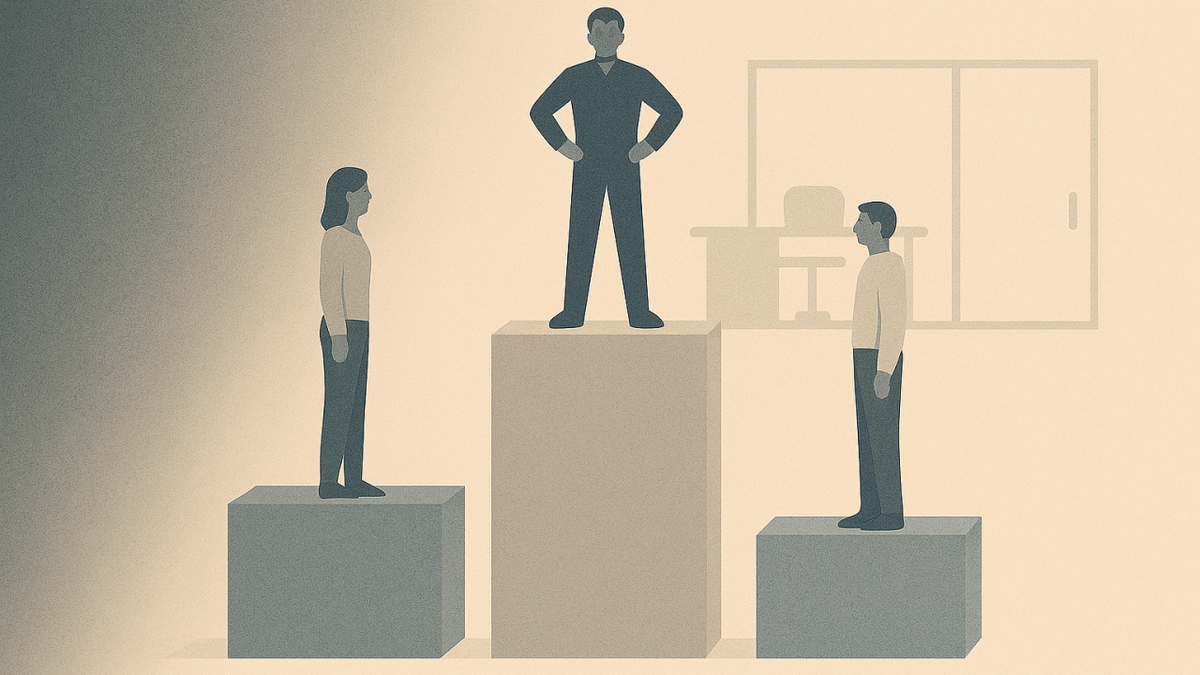
Power makes people behave worse, not because they start out bad, but because systems reduce accountability and empathy at the top.
This connects to entitlement in two ways. People in positions of power often develop an inflated sense of their own merit and moral correctness. Their environment reinforces the belief that they are entitled to special treatment, resources, or exceptions.
Many people believe they are in positions of power, purely because they are part of the lucky 'have' group. It is easy to find reasons to feel you have power over others.
Relevance to organisations
This isn’t me just ranting about the world. You know I have a deep interest in organisational systems. This translates to the corporate world in that if you assume people are selfish, you design systems (and not just organisations, but governments, and schools) that:
- Centralise control.
- Reduce autonomy.
- Emphasise punishment.
These structures often create or amplify entitlement; people cling to what little power or privilege they have because they assume others will otherwise exploit them.
So, I did some more digging. Someone’s bad parking drives some thinking; I clearly have too much time on my hands.
Bregman’s core claim is that humans are naturally cooperative, and most dysfunction comes not from people, but from systems built on distrust. When you apply that lens to workplace cohesion, a pattern emerges:
Organisations with persistent fragmentation often operate on the unspoken assumption that people will act selfishly unless tightly controlled. Ironically, this assumption creates the very behaviours leaders fear, especially entitlement, goal‑hoarding, and silo protection.
Hierarchy creates psychological distance
Bregman highlights a consistent finding across social science:
- Power reduces empathy.
- Distance increases dehumanisation.
- Weak feedback loops allow leaders to see themselves as exceptions.
In a workplace, hierarchy subtly encourages leaders to:
- View their goals as more important than others’.
- Assume they have a clearer picture of “what’s best”.
- Prioritise local wins over collective alignment.
This isn’t ego; it’s structural. A system that elevates people without maintaining closeness produces entitlement disguised as strategic focus.
Outcome: cohesion erodes because leaders act from separate vantage points, not shared purpose.
A cynical model of human nature produces control-based leadership
Much modern management is built on the assumption that people are naturally:
- Lazy (especially when they are working from home!).
- Self-interested.
- Resistant to change.
This worldview results in:
- Centralised decision‑making.
- Command and control behaviours.
- Competition between leaders for attention, budget or recognition
When leaders are rewarded for individual delivery rather than collective impact, they naturally double down on personal fiefdoms. In Bregman’s framework, entitlement here is a systemic byproduct of distrust, not a personal flaw.
Outcome: cohesion collapses because the system incentivises self-preservation behaviour rather than cooperation.
Scarcity thinking fuels silo protection
Bregman stresses that conflict thrives in conditions of perceived scarcity—whether material or psychological.
In many workplaces, leaders operate under:
- Shrinking budgets.
- Overwhelming initiative loads.
- Unclear strategic priorities.
- Constant pressure to “protect” their team.
Scarcity creates defensiveness. Defensiveness creates entitlement. And entitlement creates silos.
Outcome: cohesion fails because leaders are focused on survival rather than collaboration.
Low-trust environments destroy agency
One of the strongest themes in Humankind is that humans flourish when they are trusted with autonomy, dignity, and moral agency.
When organisations operate from the opposite assumption (“people can’t be trusted”), leaders experience:
- Reduced choice.
- Constrained creativity.
- Pressure to follow rigid processes.
- Lowered ownership for shared outcomes
A leader who feels disempowered often compensates by seeking pockets of personal control, which, in turn, looks like entitlement.
Outcome: cohesion breaks not due to selfishness, but because the system suppresses the conditions that make cooperation natural.Outcome: cohesion breaks not due to selfishness, but because the system suppresses the conditions that make cooperation natural.
Call to action
If we want more cohesion, trust and shared purpose in our organisations, we need to look beyond individual behaviours and examine the systems that breed entitlement in the first place. I’d love to hear your thoughts: where have you seen structures, not people, driving fragmentation, and what would it take to redesign for something more hopeful?